Colombia
Bogotá · Ciudad Bolívar · 8,600 ft
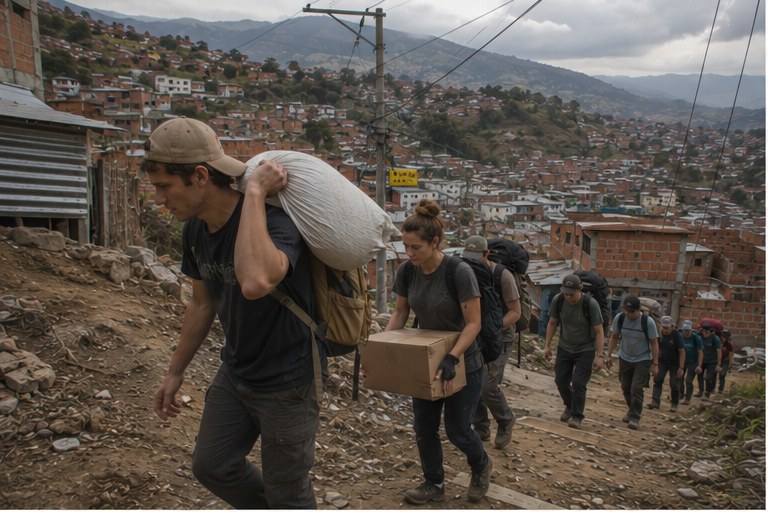
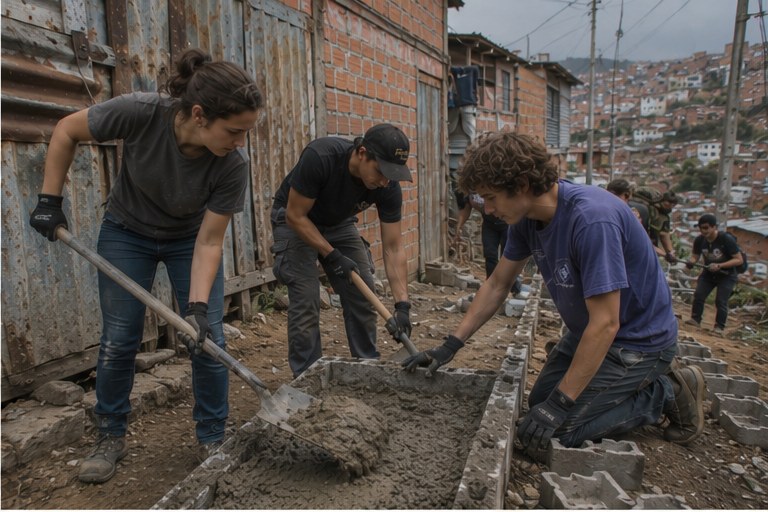
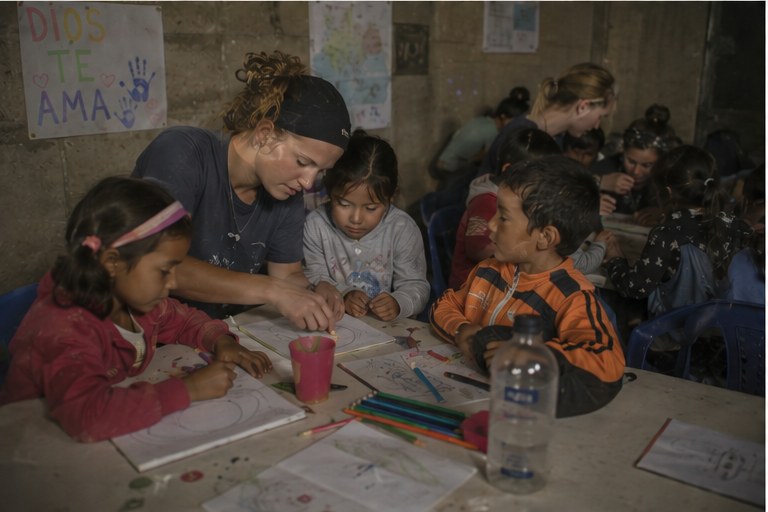
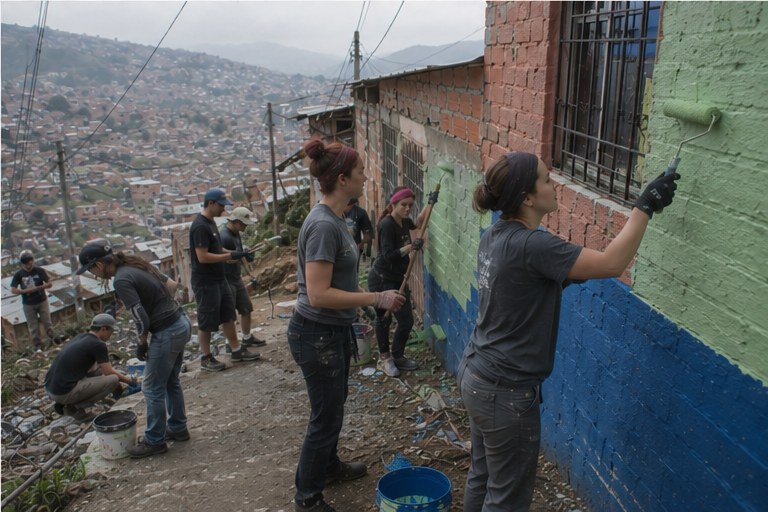
Colombia is a country the world wrote off. What you find is a nation trying to stitch itself back together after sixty years of civil war. Bogotá sits at 8,600 feet - a city of eight million, and on its southern edge is Ciudad Bolívar, one of the largest slums in the Western Hemisphere. 700,000 people live there. Most arrived as refugees, displaced by fighting between the army and guerrilla forces, carrying what they could fit in a bag. They built homes out of cinder block and scrap metal on hillsides so steep the government will not pave them. Many neighborhoods lack running water. Many lack electricity. You will climb those hills on foot. You will walk into community centers where local pastors run feeding programs and after-school tutoring in rooms with no heat and one light bulb. You will sit with mothers who were forced to choose which child to bring when they fled. You will play with kids who have never left their barrio, whose entire world is a few square blocks on a hillside above a city they can see but cannot reach. Some of those kids are being recruited by gangs. Some of them are twelve. You will help. You will carry supplies. You will paint. You will dig. You will cook. And at night, you will sit in your tent and try to process what you saw, and you will not have the words yet. That is normal. The words come later. The ache comes first.
Ecuador
Quito Highlands · Quechua Villages · 9,350 ft
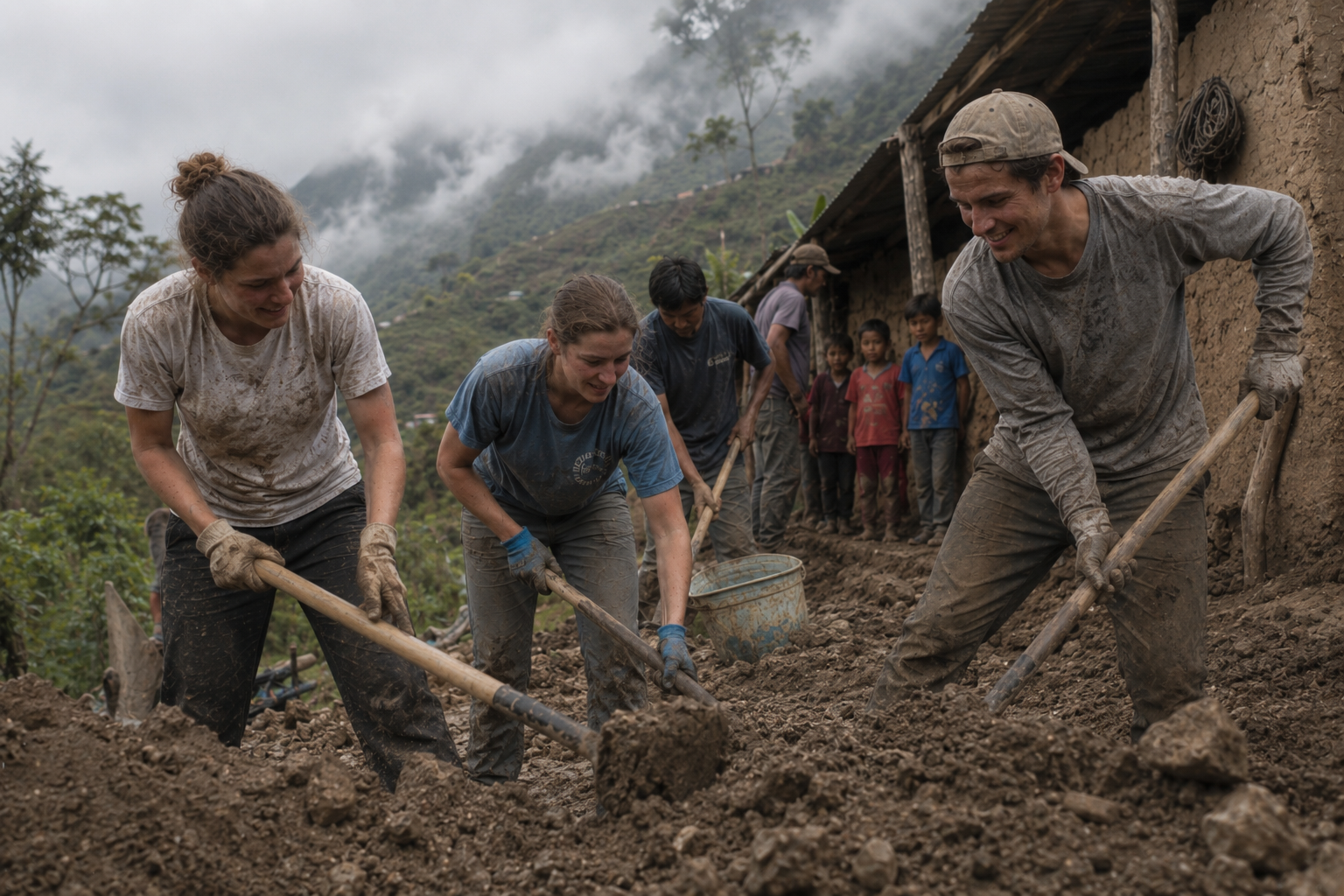
Quito is the second-highest capital city on earth. Outside the city, in the highlands and the Amazon basin, indigenous Quechua communities live in villages you will not find on Google Maps. The poverty is not the urban poverty of Bogotá. It is quiet. It is a family of seven in a one-room house with a dirt floor and a cook fire, four hours from the nearest hospital. It is a child who walks ninety minutes to school every morning through mountain fog, if there is a school at all. Ministry here is physical. You clear land. You help build. You carry water. You visit homes where the walls are made of mud and eucalyptus poles and the roof is corrugated tin held down with rocks. You eat what the family eats, which might be potato soup for the third day in a row. You learn that generosity does not require surplus. The people who have the least share the most. That will convict you in ways a sermon never has.
Peru
Cusco · Andean Communities · 11,000 ft
Cusco was the center of the Incan Empire. Today Catholic cathedrals sit on Incan temple foundations. The spiritual history is built into the walls. Outside the tourist center, in the communities above the city at 11,000 feet, families live in adobe homes without plumbing. Children herd llamas before school. If they go to school. Malnutrition is common. The altitude makes everything harder. Cooking takes longer. Healing takes longer. Breathing takes effort. You will serve in communities where the local church meets in a room the size of your bedroom at home, with plastic chairs and a single speaker that buzzes. The pastor works a second job six days a week and preaches on the seventh. You will be asked to help in ways that are unglamorous. Mixing concrete. Digging trenches for water lines. Sorting donated clothing. Feeding toddlers whose mothers are working fields somewhere you cannot see. You will also have the chance to trek the Inca Trail to Machu Picchu - four days through cloud forest and mountain passes, arriving at dawn at one of the most significant ancient sites on earth. It is earned, not toured.
Brazil
Rio de Janeiro · Favelas of the Zona Norte
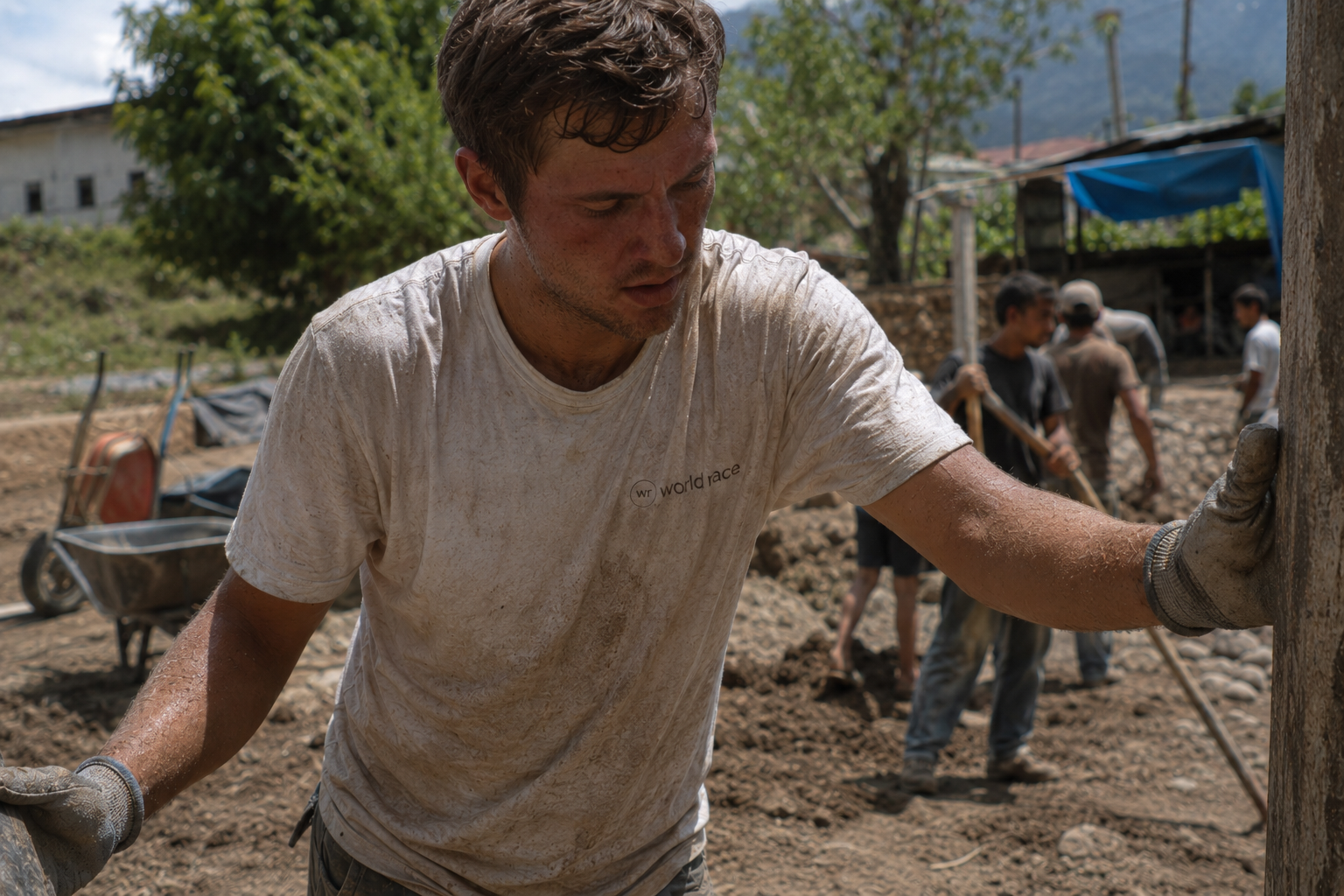
Brazil is a country of stunning beauty and brutal contrast. Rio de Janeiro is the postcard - beaches, Christ the Redeemer with arms open above the city, samba in the streets. Climb the hills behind that postcard and you enter the favelas, dense informal communities built on slopes the government does not officially recognize. Over a million people in Rio alone live this way. Homes stacked on top of homes, narrow alleys, exposed wiring, open sewage running down the hills when it rains. Gangs and militias control entire neighborhoods. Police incursions are violent and frequent. Children grow up learning which streets to avoid and which sound is fireworks and which is not. In the middle of it, the local church is doing what no one else will. Pastors who grew up in the favela and chose to stay. Community centers tucked between cinder-block houses, running feeding programs, after-school tutoring, Bible studies, music lessons for kids who would otherwise be out on the street. You will serve alongside them. You will mix concrete in the heat. You will paint and build and repair. You will sit on plastic chairs in tiny sanctuaries and worship in Portuguese with people who praise God louder than any congregation you have ever heard. You will play with children whose laughter cuts straight through the noise of a neighborhood that never sleeps. You will eat rice and beans and feijoada at someone's kitchen table and be welcomed like family by people who have every reason to be guarded and are not. Brazil will teach you that joy is not the absence of suffering. It is defiance in the face of it.
Argentina
Buenos Aires · Heading South to Patagonia
Buenos Aires is a city of faded grandeur and fierce faith. The Argentine church has survived military dictatorships, hyperinflation, economic collapse, and cultural indifference. They know what it costs to follow Jesus when following Jesus is not popular. You will serve in neighborhoods where families who once owned businesses now collect cardboard at night to sell by the kilogram. The poverty in Argentina does not look like the slums of other countries. It looks like your neighbor's house, except the lights are off and the fridge is empty. It is the kind of poverty that hides behind closed doors, and it is devastating in a different way.
Chile
Patagonia · El Chaltén · Argentina/Chile Border
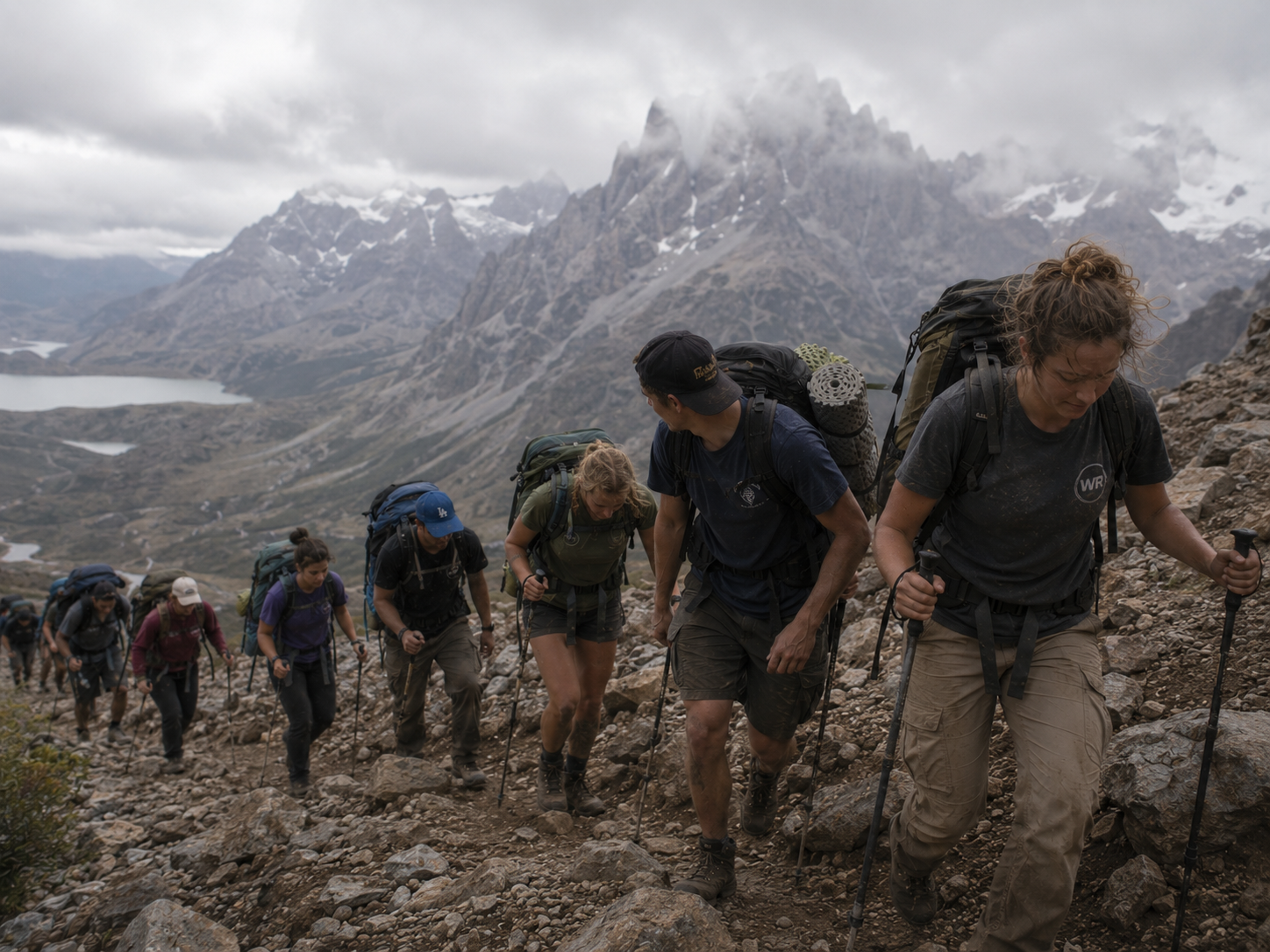
Chilean Patagonia is home to one of three major treks on this route: Mount Fitz Roy and Laguna de los Tres. The Tehuelche called Fitz Roy 'the smoking mountain' because clouds cling to its peak so persistently that a clear day feels like a gift you did not earn. The hike climbs steadily through forest for nine kilometers - manageable, even pleasant. Then the final kilometer arrives: 400 meters of elevation gain over loose scree and boulders at grades that hit 50%. Your legs burn. Your lungs burn. You question your choices. You watch your teammates scramble and cheer each other on, and you realize this is what the body of Christ actually looks like when nobody is performing. Then you crest the ridge and the glacial lagoon opens below - turquoise water at the foot of Fitz Roy's east face, condors circling overhead with 11-foot wingspans. The wind tries to knock you sideways. You are standing at the bottom of the world and you have never felt closer to the top of it. Something inside you breaks in the good way. The way that makes room.
Poland
Kraków · Refugee Centers
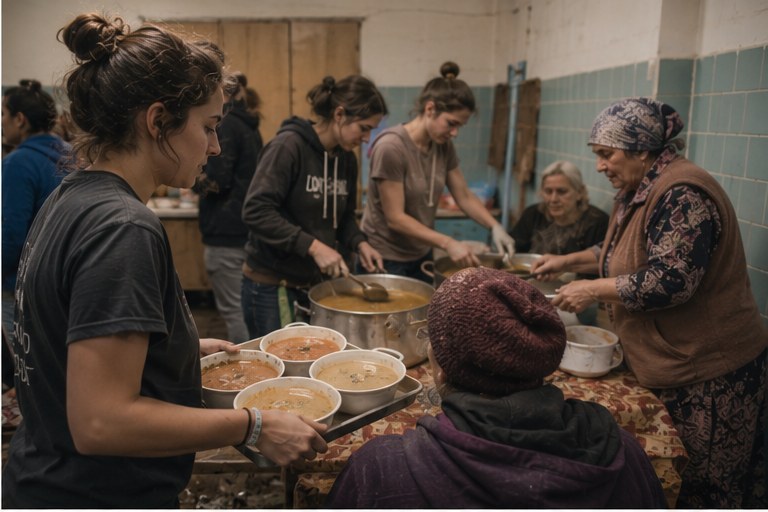
You land in Kraków and walk into the largest refugee crisis in Europe since World War II. Since Russia invaded Ukraine, over a million Ukrainians have come to Poland. Many are still there. Entire churches have converted their sanctuaries and basements into housing. Polish families have taken strangers into their homes for years now with no end in sight. The initial wave of international attention has faded. The cameras left. The refugees did not. You will work in church-run refugee centers. The work is not theoretical. You sort donated clothing by size into bins while a line of mothers waits outside. You cook meals in a church kitchen for fifty people, sixty people, however many show up. You run kids programs for children who were in school in Kharkiv six months ago and now speak no Polish and know no one. You help with language tutoring. You move furniture. You clean. You will sit with a woman who does not speak your language and hold her hand while she cries because her husband is still fighting and she has not heard from him in three weeks. You will play with a six-year-old who draws pictures of airplanes - and when you look closer you realize they are not airplanes, they are the jets that bombed his school. The Polish church has not flinched. They said yes when the refugees arrived and they have not stopped saying yes. They are tired. Their resources are stretched thin. They need hands. Yours. This is the kind of hard where you look war in the face through the eyes of the people running from it, and you realize the only thing you can do is stay. Stay in the room. Stay with the person. Stay when it would be easier to look away. That is the ministry. Presence. The willingness to not leave.
Moldova
Villages · The Country the World Forgot
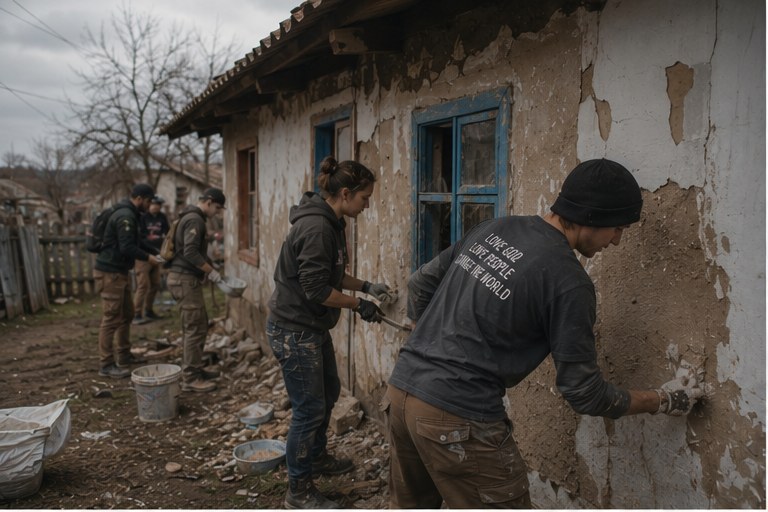
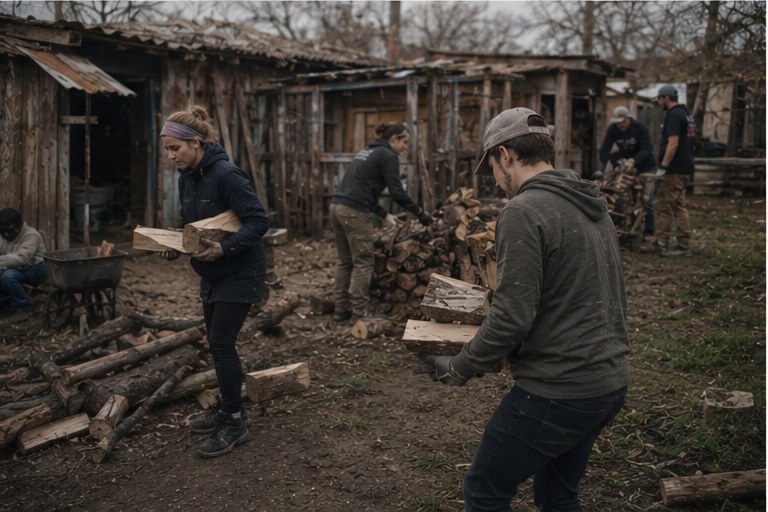
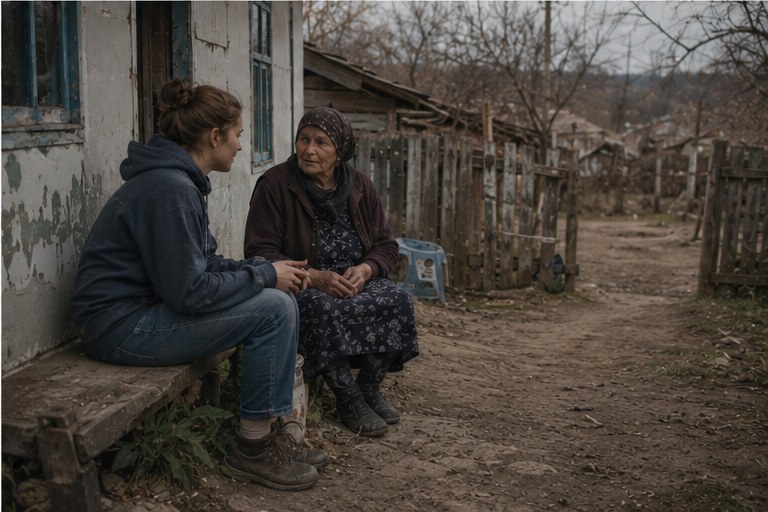
Moldova is the poorest country in Europe. Most people have never heard of it. That is part of the point. Average monthly income is around $400. The infrastructure is crumbling. Young people leave as fast as they can for Western Europe, and the villages are emptying out. What remains is the elderly and the very young, left behind while the working generation goes abroad for wages. Walk through a Moldovan village and you will see old women sitting in doorways of houses that are falling apart, raising grandchildren whose parents are cleaning hotels in Italy. Then the war started next door. Over 100,000 Ukrainian refugees crossed into a country that could barely support its own population. And Moldovan families took them in anyway. People who have almost nothing sharing what little they have with people who have less. You will serve alongside local ministries in villages where the church is the only institution that still functions. You will do physical labor. Building. Repairing homes. Cleaning community spaces. Cooking communal meals in kitchens that serve both Moldovan families and Ukrainian refugees eating at the same table. You will visit elderly people who have not had someone knock on their door in weeks. You will carry firewood. You will fix fences. You will do the unglamorous work that no one photographs and no one applauds and that matters more than anything you have ever done. Moldova will gut you. Not because it is dramatic. Because it is quiet. Because the suffering is invisible. You will stand in a Moldovan village church on a Sunday morning with twelve people and a wood stove, and you will understand something about faithfulness that you could not learn any other way.
France
Saint-Jean-Pied-de-Port · The Pyrenees
Saint-Jean-Pied-de-Port sits at the foot of the Pyrenees, the traditional starting point of the Camino. The first day is the hardest - a steep mountain crossing that gains 1,400 meters before dropping into the Spanish town of Roncesvalles, where a medieval monastery has received exhausted pilgrims since the 12th century. You sleep in a bunk bed in a stone room alongside strangers from thirty countries. Lights out at ten.
Spain
The Camino de Santiago · 100+ Miles on Foot
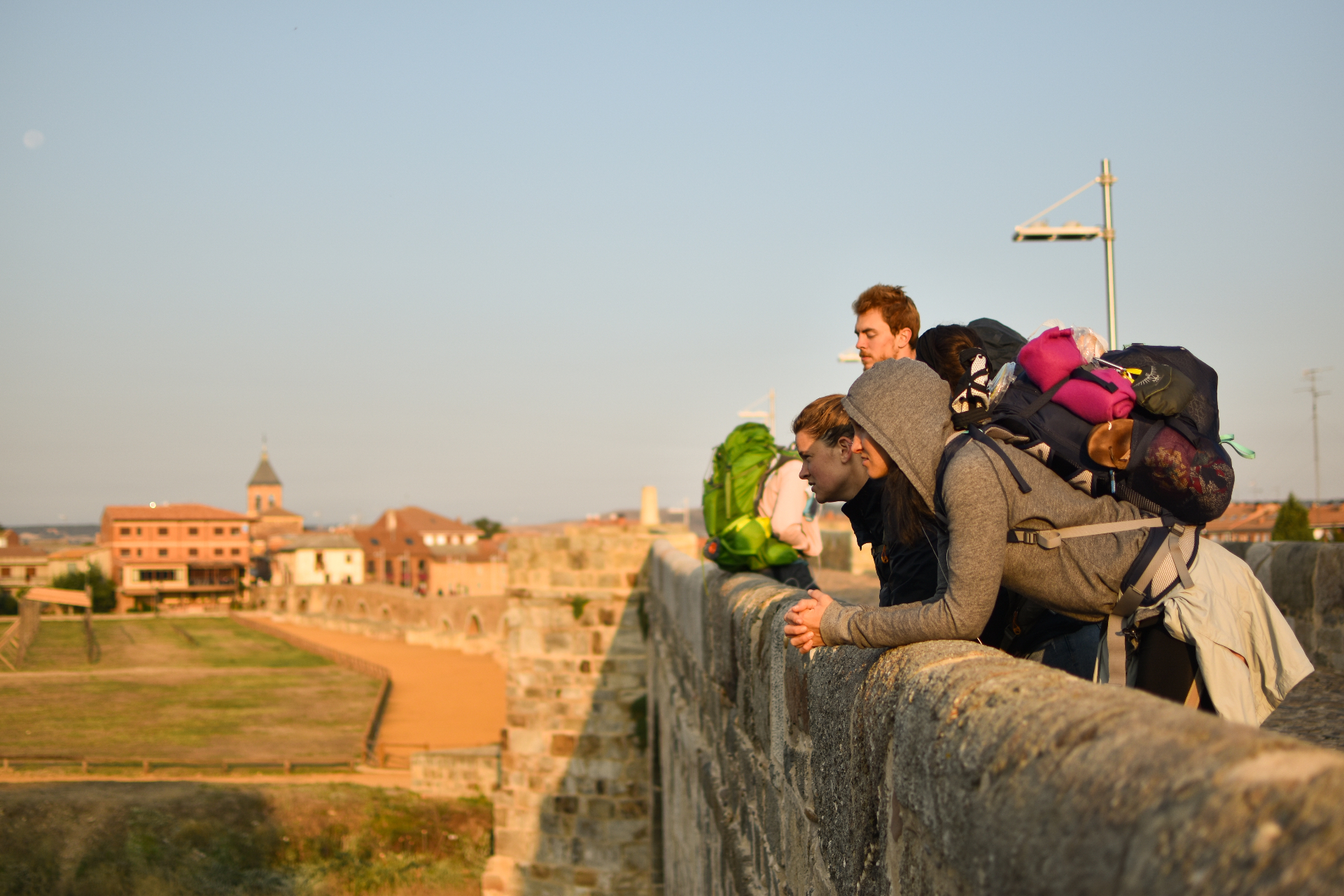
In the ninth century the body of the Apostle James was discovered in a field in northwestern Spain. James - one of the first three disciples Jesus called. A fisherman from Galilee who dropped his nets the day he was asked. According to tradition his followers carried his body by boat to the coast of Spain, where it was buried and forgotten for eight hundred years. When the tomb was found, pilgrims began walking to it from their front doors. A thousand years later the trail is still there. The yellow arrows still mark the way. The stone churches along the route still stand. The trail rolls across northern Spain through wheat fields, forests, small stone villages, and long stretches where there is nothing but the sound of your own feet on dirt. You carry your pack. You sleep in pilgrim hostels called albergues. Bunk beds. Shared bathrooms. A few euros a night. You eat communal meals with people you met that morning who already feel like family. Something happens around day three or four. Without a phone pinging, without a schedule demanding, your mind gets quiet. And in the quiet, God speaks. Sometimes it is just the slow realization that you have been carrying something for years and you can finally put it down. You walk with everything you have seen. Every face. Every story. When you arrive at the Cathedral of Santiago de Compostela, you walk through the same door pilgrims have walked through for a thousand years. A Mass is held every day at noon. Your name and your country are read aloud. You are counted among the pilgrims. Most people cry.
Switzerland
Bernese Oberland · Grindelwald & Lauterbrunnen
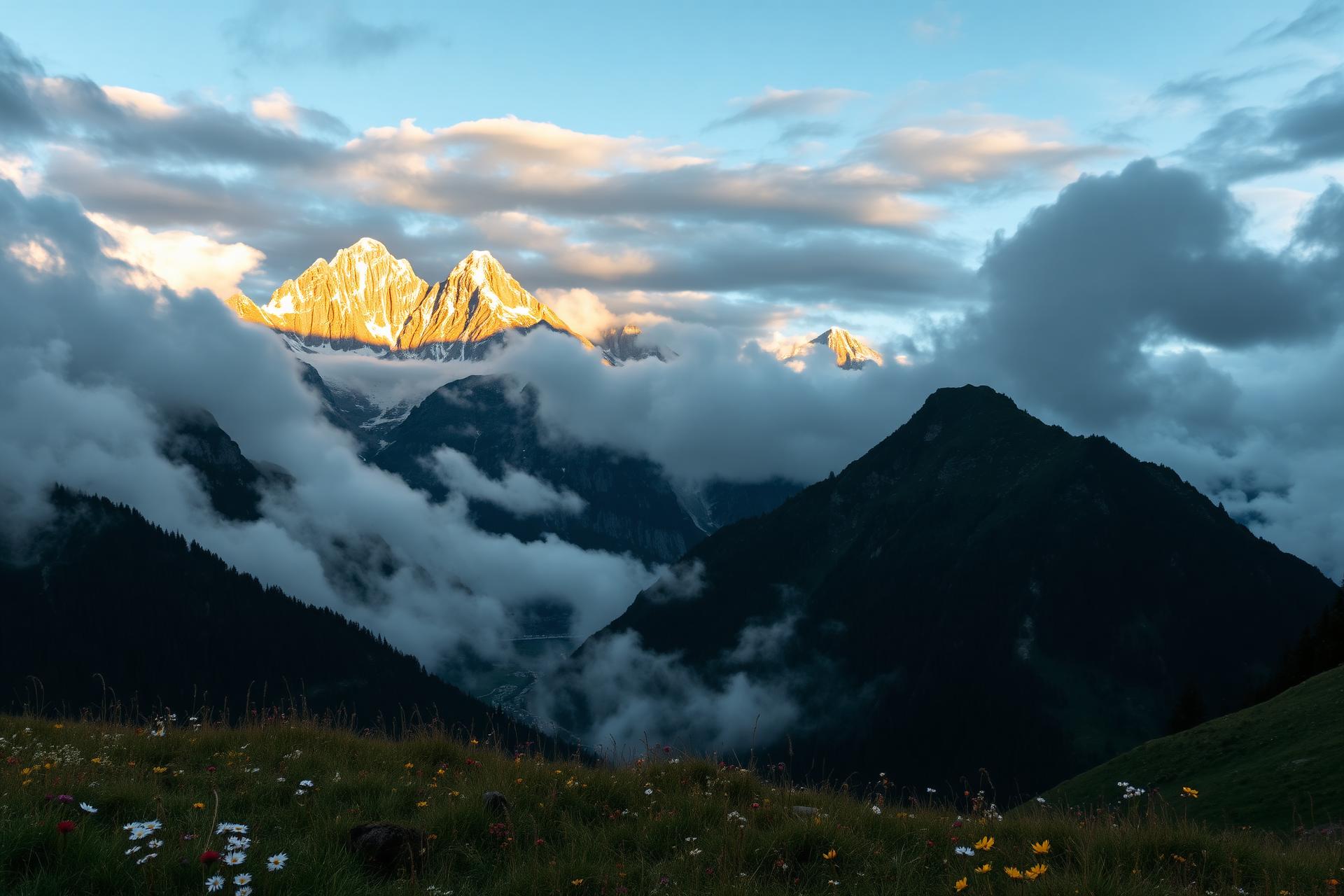
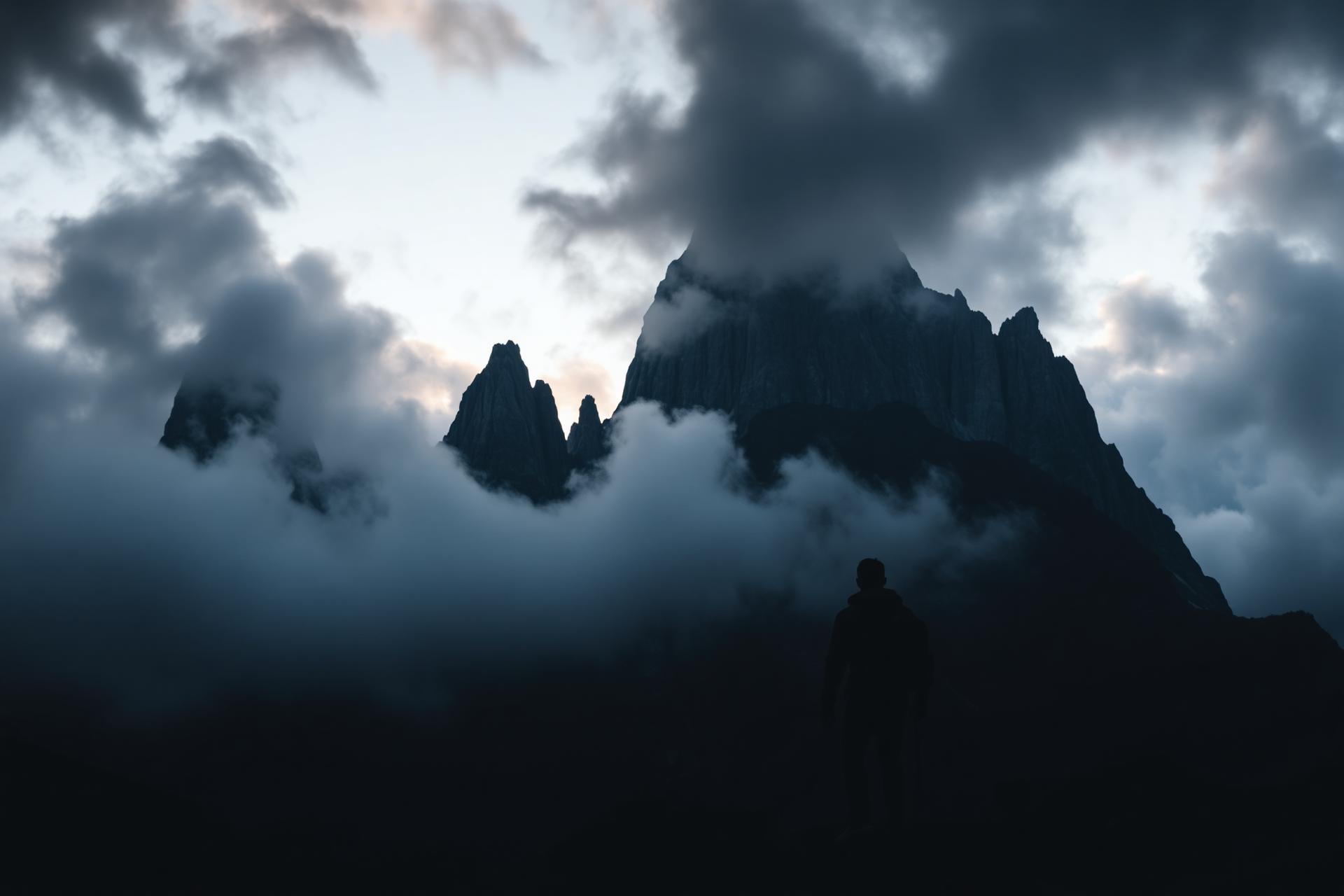
The Lauterbrunnen Valley is a crack in the earth flanked by thousand-foot rock walls and 72 waterfalls. The Eiger, the Mönch, and the Jungfrau rise above it like a wall between the known world and whatever lies beyond. The names tell a story - maiden, monk, ogre. Medieval Christians saw the gospel written into their own mountains. The villages here grew around valley parish churches in the Middle Ages. Grindelwald's first church was a wooden chapel from the 12th century. Lauterbrunnen's church was built by Walser settlers in the 15th century. These communities were founded by people who looked at the most dramatic landscape in Europe and decided the right response was to worship. You will hike through alpine meadows above the treeline, past glacial lakes and snowfields. You walk from Grindelwald to Kleine Scheidegg beneath the north face of the Eiger. You walk the cliff-edge trail from Grütschalp to Mürren with the entire Lauterbrunnen Valley dropping away beneath you. You climb to Bachalpsee, a lake so still it mirrors the mountains behind it perfectly. The Alps are not an escape. They are a reminder. The same God who sent you into Ciudad Bolívar and the refugee centers of Kraków and the forgotten villages of Moldova made this. He made the broken places and the beautiful ones. You just needed to climb high enough to see it. Time in Switzerland is spent alongside local ministry partners. Community. Debrief. Integration. You sit in a room with your squad and you tell the stories. Being held. Being known. Being sent home different.